The cabinet looks wide enough. Then you meet the pipe, the valves, and the hinge that sticks out just far enough to ruin your plans.
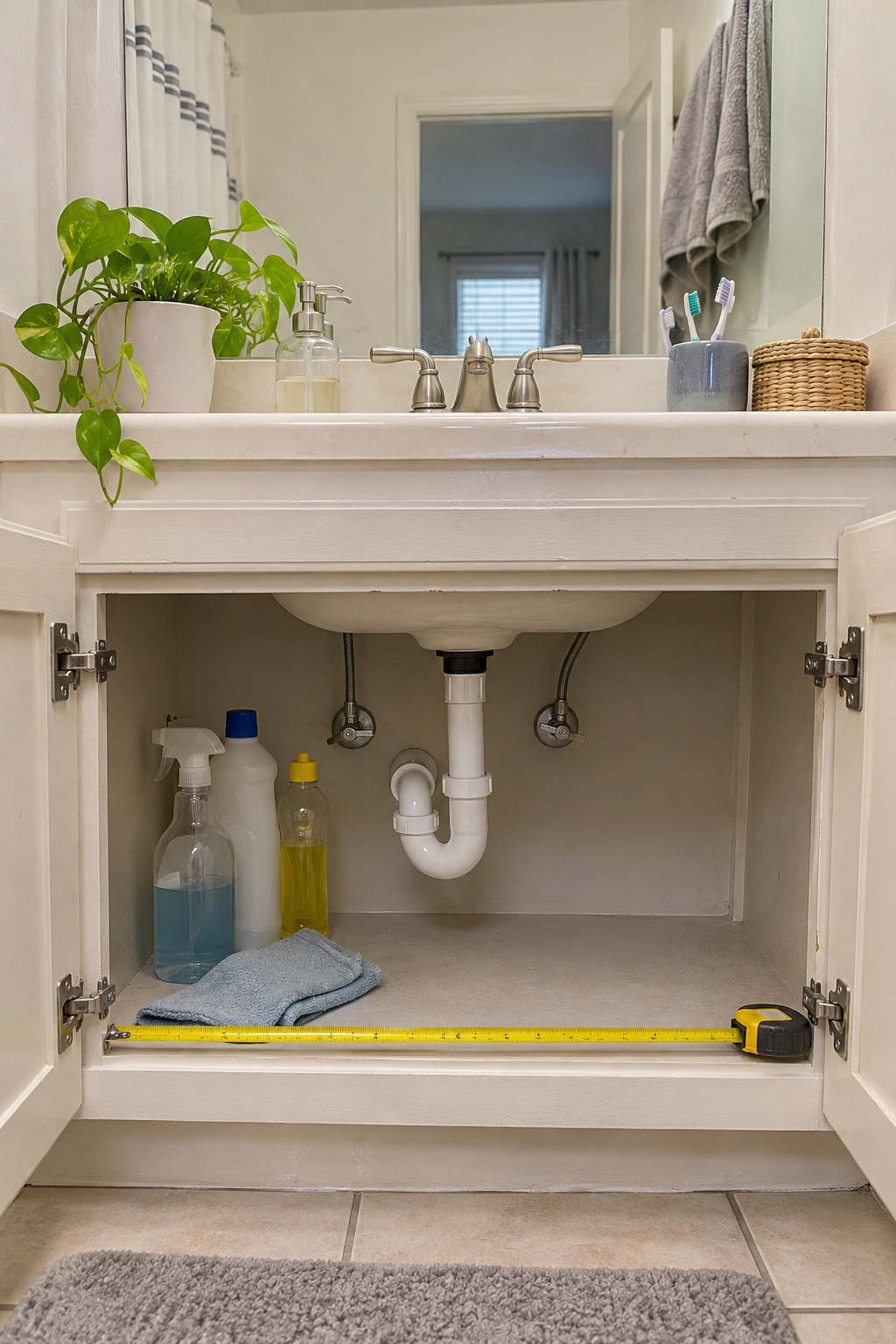
The floor under a bathroom sink can swallow a surprising number of spare soap bottles. Once you pull everything out, you can see the space you actually have: maybe a clear strip beside the drain, maybe two little pockets, maybe an opening so narrow that the bin you had in mind would never get through it.
Grab a tape measure and an empty cardboard box. Before you look at organizers, decide what you need to reach regularly. Daily supplies can live at the front. Refills can sit farther back, as long as you can still reach the shutoff valves.
1. Measure the opening with the doors open
Measure the width at the narrowest point the organizer will pass through. Check the door edge, front frame, center divider, and hinges. Measure at the height where the organizer will actually pass—an upper tier can hit a hinge even when the base clears it. Write down the smaller number if the opening and the interior width differ.
2. Find one continuous lane beside the pipe
Measure the clear width on each side of the drain. Then check the usable depth from the door-closing line to the first obstacle, and measure up from the cabinet floor to the lowest obstruction along that lane. Check the curved trap, the underside of the basin, supply hoses, and valve handles. If a shelf will cross the middle, measure the pipe at the height and depth where that shelf would sit.
3. Check how far the organizer can come out
Cut cardboard to the organizer’s footprint and slide it along the intended path. Add a bottle or a second piece of cardboard to represent the loaded height. Does it catch on the frame? Can you grab the tallest spray bottle without lifting it into the pipe? For a drawer, look up its extended depth and check the room in front of the cabinet. For a rolling caddy, allow room to lift the handle over the front lip.
Clear opening width · left and right lane widths · usable depth · loaded height · clear space in front
Two organizers to compare once you’ve measured
A clear lane on one side: YouCopia RollOut Under Sink Caddy, 8-inch model

The brand lists the caddy at 7.7 in. wide × 16.4 in. deep × 5.3 in. high, with depth increasing to 21.3 in. in the listed basket configuration. Allow for the basket wherever you hang it and for bottles that stick up above the rim. The caddy has back wheels and needs no tools to set up. It makes sense where you can pull a single row of bottles forward without crossing the drain.
See the 8-inch caddy at YouCopia · Find model 50261 on Amazon
A pipe down the middle: Pantrymate Expandable Under-Sink Shelf
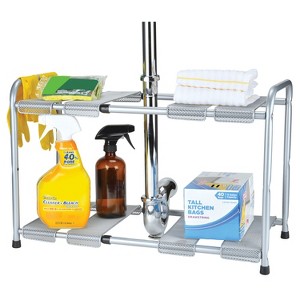
Target lists this shelf at 18–30 in. wide × 11.5 in. deep × 15 in. high. The shelf separates into two pieces for assembly around the pipe and has removable mesh panels. Check where the upright supports, frame bars, and bottle tops would sit. Removing a panel only clears the spot where that panel was.
View the Pantrymate shelf at Target · Compare a removable-panel option on AliExpress
The AliExpress listing is a separate product. An archived listing identifies it as a two-tier shelf with 10 removable panels. Confirm the selected variant’s measurements and delivery at checkout.
If your two clear lanes are too narrow for either option, try the shallow bins you already own. Put the everyday bottles in one bin, the spare supplies in another, and leave enough room to reach the valves. Close the doors and pull each bin out once before calling it done.
Products were compared using published specifications. The links in this draft are standard shopping links.